Sunday, May 17, 2020

Solitude is the sine qua non (crucial!) for enriched life!

[6 minute Quick Read]


[Solitude and the Sea - Painting - By Jacques Bodin]


When is the last time, you spent some time with your thoughts?

In all possibility, you may not remember at all. 

Ubiquitous smart screens are encroaching every aspect of our life. Waiting for a doctor's appointment, or in Queue for some booking, or waiting for the bus, or even in restrooms – we fiddle around with our smart-phones.

That's a disaster for deep thinking. 


In Lead yourself first, author – US court judge and Army Veteran argues for the importance of spending time alone. It's not only for creative professionals. It is important for everyone. Spending time alone has benefits like  


  • Simplifying hard problems, one is struggling with.   
  • The clarity in thinking and writing
  • Conveying complex concepts in presentation, speech in engaging manner.
  • Excellent regulation of emotions leading to better emotional intelligence
  • Build moral courage – look at the life of Martin Luther King, Mahatma Gandhi, etc.
  • To strengthen relationships. This sounds odd. But yes, solitude helps to build close connections.


Cal Newport argues in digital minimalism with the example of Lincoln, that Lincoln’s habit of spending time alone helped save the nation! He further gives many examples, quotes supporting solitude. 

So, what is Solitude precisely - As defined in "Lead yourself first" – 

 “Subjective state in which your mind is free from inputs from other minds”. 

So, when you are looking at the iPhone screen, watch TV, or listening to songs – it violates the idea of solitude even if you are alone at that time. To take full benefit of Solitude, just remain with your thoughts, cut-off all kinds of disturbances. Period.  Digital Minimalism's chapter-4 focuses on a few practices to build solitude and gaining the advantage of it. 

Practice #1:  Leave your phone at home. 

We are too addicted to the phone. Do we need it? Those who are born before 1980 must have experienced life without a mobile phone. So, learn to disassociate from the phone. Maybe while going to class, teaching a class, for meetings. Just keep it away. If leaving at home is not practical, then maybe leaving in a vehicle (glove-box) or keeping it at the bottom of your backpack. That will make it difficult to reach and you will use it only when it is necessary. 

Practice #2:  Take Long Walk. 

Walking is often looked like one of the best forms of exercise. But we often overlook its unique value in building solitude. The chapter refers to Friedrich Nietzsche who wrote his landmark essay in just two weeks attributing credit to walk. He said, "Only thoughts reached with walking have values". To maximize the benefits of the walk, take it alone, if possible, in a scenic place. And keep the phone at the bottom of your backpack or leave it home.  

Practice #3:  Write letters to yourself. 

Cal Newport is not advising like writing a diary or journal. You may use Moleskine like him or any other notebook. But what he suggests is to write like you are talking to yourself. This is a great suggestion for clarifying one's thoughts. And yes, you have not engaged with another mind also. This perfectly suits the concept of solitude. Many books advocate the use of writing to clarify one's thinking. For example, you can look at the title "Accidental Genius”. I often scribble my thoughts and it helps. And I am certainly going to get this idea-note-book. 

[This is my review/summary  of Chapter-4 of Cal Newport's Digital Minimalism] 

[You can check Chapter-3 summary/review here] 

[Image Source: Solitude and Sun – From Wikimedia – accessed as of 17-May-2020]

Thursday, April 30, 2020

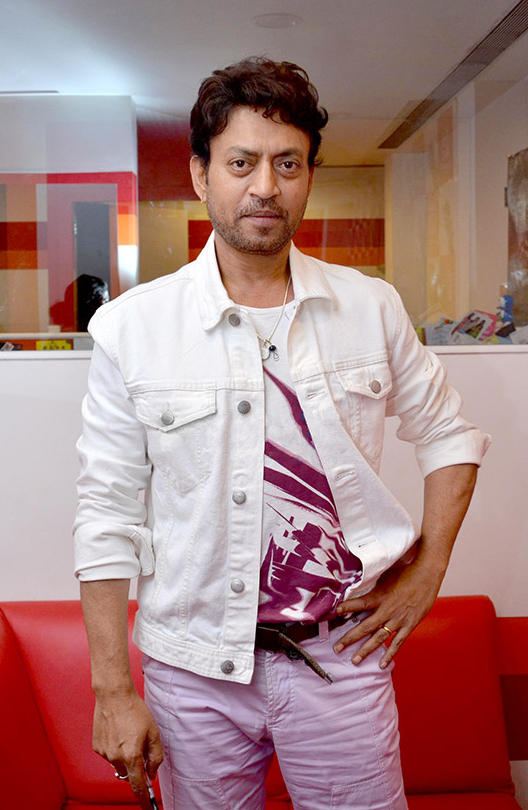
Tribute to Irrfan Khan!

 3 Minute Quick Read.


[Image Source: Wikipedia ]


Irrfan Khan passed away just at 53. (29 April 2020).

Tributes from all over the world are pouring, and rightly so.

He rocked not only Bollywood but also Hollywood flicks. 

A very few Indian actors to do so. 

His work is admired by likes of Tom Hanks too, calling him “The coolest guy in the room”.

His filmography shows a lot of films, television, and video games.

I distinctly remember watching him in “Kamla Ki Maut” in Pune’s Deccan theatre.

(Seems there is debate on whether his first film is Salaam Bombay or Kamla Ki Maut. Though I have watched both, I remember him only for Kamla Ki Maut.)

I searched YouTube and found his Salaam Bombay work too.

Those were engineering college days; the movie was either Matinee or Morning show. And low on ticket cost for student days. My friends mocked me after the movie for this choice. Movie had no dance sequence, fights, chase-scenes, or any other typical Bollywood Masala. But still, Irrfan khan made the place in my heart somewhere.

Afterward, I watched his lot of movies, Hindi mainstream, offbeat, and even English movies. As of today, out of his filmography, I have seen his 24 movies. In almost every movie his acting and role were outstanding. And I will continue watching his films.  

But the movie that deeply touched my heart and I will like to watch anytime again is “The Lunchbox”.

It is a subtle platonic love story, unfolding slowly through letters.
It has no sexual tones of any kind.
The duo never meets in the film – And protagonist Irrfan’s last letter concerning the heroine more than oneself, takes the movie to great heights. 

In my humble opinion, it is probably the greatest love story made in Indian Cinema. No wonder it is highly acclaimed and won a large number of accolades all over the world.

Here is a brief trailer of “The Lunchbox”. 

For a current Socially isolated & distressed times, It is perfect film to watch, and a tribute to great actor!  


[Video Source: YouTube  ]


Friday, April 17, 2020

The only way to start (and stick) to digital quarantine (aka declutter or detox)!

7 minute Quick Read.  


Japanese Olympic player addicted to mobile games raked up 5000 $ (close to 4 Lac Indian Rs) bill and another player played Pokémon at night, overslept and missed his Olympic game altogether. 

It’s not peculiar to Japanese. Technology addiction is not only common but also play a harmful role in our life. 

A quick Google search shows many tips and techniques to get rid of addictive games, social media, and new technology. 

Cal Newport, an author of digital minimalism, claims that such quick fixes don’t work. 

He performed a live experiment. He mailed for voluntary participation to subscribers of his blog. He anticipated 50 to 100 responses. He was flooded with 1600 volunteers. The event made national news. 

Through experiment & careful study, the author came with a concrete way to address addiction. 

Your technology addiction plus a strong billion of investment pull by big tech firms make it almost impossible to get rid of. So if you really want to escape from the clutches, - quick fixes and tips don’t work.  Book suggests radical suggestions in three steps. 

Step #1: 

Decide optional technology. Optional technology doesn’t impact work or personal life. Thus work-email is not optional – it is a necessity. So what-ever distracts you but not vital for personal or professional life is optional. Games, Television is optional, a microwave isn't. WhatsApp is optional if it is a personal tool. But it is used for sales calls, then not.  

Step #2 

Take a 30 days break from technology!  Yes, you read it correctly. The author advises 30 days complete break from optional technologies. If it is not possible in some areas, then the workaround is ok. But take a break from all distractions.  First one or two weeks you may find it difficult, but then you will realize the futility of clinging to them. 

Another important thing is to find engaging and satisfying activities for you. You may want to learn music, read books, play with your kids or walk with your spouse holding hands. Just find and cultivate quality better alternatives in life. Alternatives that make your life rich in quality. 

Step #3 

After 30 days, slowly add the necessary technology back in life. But don’t do it like typical detox. In typical detox, people fully indulge in it. In 30days most people lose their taste in technology. He provides three key questions to ask before adding technology back in life.  

  1. 1The first check is necessary. For instance, one interested in political news turns to allsides.org. Or instead of doing networking online, you can start doing it in the real physical world. If still, you find that the technology then three questions are - 
  2. First Question – is this technology support the value that I want to nurture in life. For example –if you value learning or value spending quality time with family, will this technology help?
  3. Second Question – is this the best way to nurture that value? Is there an alternative? For example, instead of keeping in touch on messages, you may want to call or meet your contacts in person occasionally – which is a more satisfying and meaningful option. 
  4. Third Question – set boundaries – how will you use this technology in day to day life. For example, you may decide to use Facebook only on weekends, or LinkedIn only 30 minutes per day. Thus even if necessary, set strict rules for using technology.   


These three steps, and three questions – help us not only to get rid of technology addiction but bring meaning and satisfaction in life. 

One doesn’t need to sacrifice lovely relationships, miss important events/presentations or meetings nor waste huge money owing to addiction.  You just need to start somewhere, so to start with, let’s first decide a 30-day break from the technology!

[This is my take or review of Chapter 3 of Cal Newport’s digital Minimalism]