Thursday, April 30, 2020

Tribute to Irrfan Khan!

 3 Minute Quick Read.
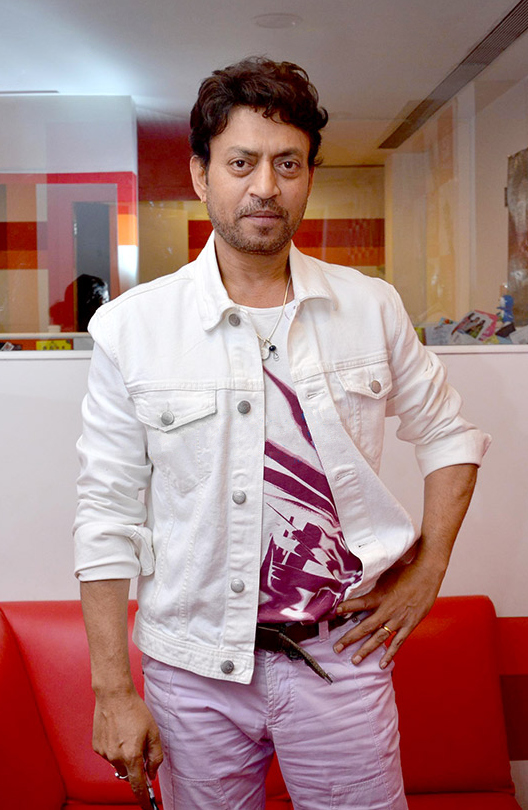

[Image Source: Wikipedia ]


Irrfan Khan passed away just at 53. (29 April 2020).

Tributes from all over the world are pouring, and rightly so.

He rocked not only Bollywood but also Hollywood flicks. 

A very few Indian actors to do so. 

His work is admired by likes of Tom Hanks too, calling him “The coolest guy in the room”.

His filmography shows a lot of films, television, and video games.

I distinctly remember watching him in “Kamla Ki Maut” in Pune’s Deccan theatre.

(Seems there is debate on whether his first film is Salaam Bombay or Kamla Ki Maut. Though I have watched both, I remember him only for Kamla Ki Maut.)

I searched YouTube and found his Salaam Bombay work too.

Those were engineering college days; the movie was either Matinee or Morning show. And low on ticket cost for student days. My friends mocked me after the movie for this choice. Movie had no dance sequence, fights, chase-scenes, or any other typical Bollywood Masala. But still, Irrfan khan made the place in my heart somewhere.

Afterward, I watched his lot of movies, Hindi mainstream, offbeat, and even English movies. As of today, out of his filmography, I have seen his 24 movies. In almost every movie his acting and role were outstanding. And I will continue watching his films.  

But the movie that deeply touched my heart and I will like to watch anytime again is “The Lunchbox”.

It is a subtle platonic love story, unfolding slowly through letters.
It has no sexual tones of any kind.
The duo never meets in the film – And protagonist Irrfan’s last letter concerning the heroine more than oneself, takes the movie to great heights. 

In my humble opinion, it is probably the greatest love story made in Indian CinemaNo wonder it is highly acclaimed and won a large number of accolades all over the world.

Here is a brief trailer of “The Lunchbox”

For a current Socially isolated & distressed times, It is perfect film to watch, and a tribute to great actor!  


[Video Source: YouTube  ]


Friday, April 17, 2020

The only way to start (and stick) to digital quarantine (aka declutter or detox)!

7 minute Quick Read.  


Japanese Olympic player addicted to mobile games raked up 5000 $ (close to 4 Lac Indian Rs) bill and another player played Pokémon at night, overslept and missed his Olympic game altogether. 

It’s not peculiar to Japanese. Technology addiction is not only common but also play a harmful role in our life. 

A quick Google search shows many tips and techniques to get rid of addictive games, social media, and new technology. 

Cal Newport, an author of digital minimalism, claims that such quick fixes don’t work. 

He performed a live experiment. He mailed for voluntary participation to subscribers of his blog. He anticipated 50 to 100 responses. He was flooded with 1600 volunteers. The event made national news. 

Through experiment & careful study, the author came with a concrete way to address addiction. 

Your technology addiction plus a strong billion of investment pull by big tech firms make it almost impossible to get rid of. So if you really want to escape from the clutches, - quick fixes and tips don’t work.  Book suggests radical suggestions in three steps. 

Step #1: 

Decide optional technology. Optional technology doesn’t impact work or personal life. Thus work-email is not optional – it is a necessity. So what-ever distracts you but not vital for personal or professional life is optional. Games, Television is optional, a microwave isn't. WhatsApp is optional if it is a personal tool. But it is used for sales calls, then not.  

Step #2 

Take a 30 days break from technology!  Yes, you read it correctly. The author advises 30 days complete break from optional technologies. If it is not possible in some areas, then the workaround is ok. But take a break from all distractions.  First one or two weeks you may find it difficult, but then you will realize the futility of clinging to them. 

Another important thing is to find engaging and satisfying activities for you. You may want to learn music, read books, play with your kids or walk with your spouse holding hands. Just find and cultivate quality better alternatives in life. Alternatives that make your life rich in quality. 

Step #3 

After 30 days, slowly add the necessary technology back in life. But don’t do it like typical detox. In typical detox, people fully indulge in it. In 30days most people lose their taste in technology. He provides three key questions to ask before adding technology back in life.  

  1. 1The first check is necessary. For instance, one interested in political news turns to allsides.org. Or instead of doing networking online, you can start doing it in the real physical world. If still, you find that the technology then three questions are - 
  2. First Question – is this technology support the value that I want to nurture in life. For example –if you value learning or value spending quality time with family, will this technology help?
  3. Second Question – is this the best way to nurture that value? Is there an alternative? For example, instead of keeping in touch on messages, you may want to call or meet your contacts in person occasionally – which is a more satisfying and meaningful option. 
  4. Third Questionset boundaries – how will you use this technology in day to day life. For example, you may decide to use Facebook only on weekends, or LinkedIn only 30 minutes per day. Thus even if necessary, set strict rules for using technology.   


These three steps, and three questions – help us not only to get rid of technology addiction but bring meaning and satisfaction in life. 

One doesn’t need to sacrifice lovely relationships, miss important events/presentations or meetings nor waste huge money owing to addiction.  You just need to start somewhere, so to start with, let’s first decide a 30-day break from the technology!

[This is my take or review of Chapter 3 of Cal Newport’s digital Minimalism


Sunday, April 12, 2020

First step in getting your life back from digital addiction!


6 minute Quick read.


Digital detox - abstaining from social media, a smart phone is popular these days. So are the attempts like deleting apps, removing notifications, purging follow lists, and un-friend contacts are also very common ways to reduce digital clutter in life

Cal Newport, author of digital minimalism argues such an ad hoc approach doesn’t really help in the long run. Particularly as you are fighting billion-dollar Goliath of tech giants spending on your attention. 

You may value your attention and time for keeping an update in your field, spending quality time with family, contributing back to society, diving deep in your spiritual practices or simply enrich your leisure life. Whatever you value, you need to protect your time. In order to get rid of attention-seeking technologies and focus on value-adding activities - rather than ad hoc approach, - what you need is overarching philosophy and strategy deriving from it.

Digital Minimalism provides us three principles for such a philosophy. 

Principle #1: Clutter is costly

For example, Thoreau spent 2 years, 2 months and 2 days in a self-made cabin in the woods. Away from the world and came out with Walden – America’s most celebrated literature piece. The biggest chapter in the book is about the economy. Thoreau meticulously tracked every dollar spent. And he concluded that to live his life, he just needs to work for one day per week. This is for the industrial age of mid-1800. Thoreau’s idea is not new. But his way of measuring money in terms of “cost of life” was new. According to him every extra hour he spent in earning, is akin to farmers' "smothered and crushed" life.  

Similarly cluttering one’s life with social media and all of its paraphernalia clutters life and leaves us “smothered and crushed” for a quality life. Thus clutter is costly

Principle #2: Optimization is important.  

The Law of diminishing returns always works. For instance, if one keeps on adding more people or resources on a software project, one may see it useful at the start. But continuous addition of manpower will ultimately retard the project. This works in every field. Hence optimization is necessary. 

So is the case for the use of technology. If we keep on adding one app or tool over others, finally it burdens us down. 

But surprisingly we don’t try to optimize use. Seemingly there are two reasons for it. 

  1. Most of tech products (e.g. Smart Wearable or WhatsApp ) are too new. Novelty seeking, experimentation factor continues and we refrain from optimization. 
  2. Second is cynical reason. Those big-tech giants are spending billions of dollars on technology. They want you to think of the ecosystem as useful, fun, and interesting. So often they instigate to refrains from optimization. 

  Thus optimization in technology is important. 

Principle #3: Intentionality is satisfying: Lessons of Amish hackers

 Amish people seems to be frozen in time, And myth goes that they are averse to technology. They are not connected to the common electric grid, don’t use automobiles, and unthinkable for smart phone addicts - they don’t use smart phones at all, not even those old numbered or dial phones. They use community phone booths. Our young generation may not have seen them at all!

Deeper research in their lifestyle shows that they don’t reject all technology. They scrutinize it carefully. If the technology is detrimental to their values, community or church they discard it. And they have a well-established community-driven process to do this.

Being intentional, purposeful in the use of tech products not only will bring satisfaction but meaning and flourishing in life.

Thus these three principles can help us develop overarching philosophy to minimize the use of technology in our life. And gain our precious autonomy - first step towards digital de-addiction

[This is my take or review/summary of 2nd chapter of Cal Newport’s book – Digital Minimalism]. 


 [Image Source: https://commons.wikimedia.org/wiki/File:Gambling_-_dependence_on_gambling.jpg ]