Showing posts with label book-chapter. Show all posts

Sunday, June 21, 2020

Brain’s Sophistication is Unmatched, Nurture it!


[ 7 minute Quick-Read ]


Aristotle said, “Man is by nature the social animal”. 


And our brain is an extremely sophisticated instrument handling this. 


This brief write-up not only pursues the brain's value but also provides practical tips to preserve and respect it.   


Have you played the game “Rock, Paper, Scissors”? I have seen Japanese kids playing “Rock, Paper, Scissors”, it's a 2-minute game to decide a winner. It appears to be a chance game. But it's not. ESPN covered it in 2007, and a winner was awarded 50,000 US$ award. These winners were consistent. Confirming it's not by chance or luck. But players mastered the art of human psychology. Winners can read subtle clues into body language, analyze recent plays, and review mental state leading to educated guesses on the next move! A noted scientist has worked on our brain’s such sophisticated social abilities. 


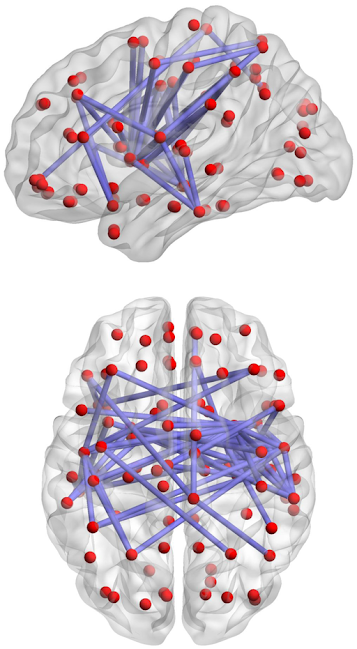
Mathew Liberman, a noted social psychologist, and a neuroscientist has done groundbreaking research in this area. Russian lab offered him 3 million dollars to do research. He declined. He discovered a “default network” in the brain. We all human beings default to this network, in the absence of cognitive work. Even a 3-second break in mental tasks and this network glows. It glows even in newborn babies - suggesting instinctual response. Matthew called it our “social cognition center”. 


This social cognition center is a tool for communication and conversation. The conversation is a very complex phenomenon. You look into the eyes, observe a person, his demeanor, verbal intonations, body language, usage of words, and his surroundings. Your brain analyses this in real-time and supports you in the correct response. And we put this sophisticated, Earth’s most evolved instrument to a reduced level of click on social media, like, upvote, share and so on. We do suffer the consequences of such choices.   


Like, upvote, forward, and comment on social media doesn’t require a sophisticated brain network. It’s like using Laser gun for chopping onions. The results are clear. More and more social media makes people unhappy. Yes, it is supported by research. Because you are “connecting” to the people, and replacing it for “conversation”. The conversation is the need for your sophisticated brain. A large number of connections, tweets, likes, and upvotes can’t replace rich “conversation” with poor “connection”. That is the basic cause of your unhappiness. Craving for a pleasant “conversation” - a real touch with human beings, can’t be restored with bothersome “connect”! 


So how do we shift to the conversation in this hyper-connected world! 


Here are three tips to nurture your brain. 


1: Don’t click like:  


Friendfeed, an early social network invented “Like”. Facebook has just adopted it. These “Like”, “upvote”, “comment”, and “retweet” are just statistical data points. Techniques reducing users to just statistics. It’s the first poison triggering a false connection as a conversation. So stop it, and your mind will start craving for real conversation.   


2: Consolidate texting: 


More and more you text in a day and with someone, your need for real “conversation” drops. So, stop using continuous texting. If texting is essential, keep blocks of time, for example, one hour in the evening or half-an-hour in lunch-break for text. And use it as an asynchronous email service. This action will enable your brain to stop anticipating text as communication. You will engage in real conversation soon. For example, my friend uses text only on weekends. Period. A drastic step, but required. 


3. Hold conversation hours


Hold special conversation hours. Fix timings and let your network know it. For instance, I used to tell everyone to call at 0500 PM. My commute used to start at that time, and I started using my commute time for calls. If someone wishes to talk to me at length, I start calling them for lunch or coffee break. I also set special meeting hours with my students. Steve Jobs was famous to set walking hours for special intensive meetings. My one mentor, a monk - also calls me on a walk after his lunch or dinner for talk. Idea is to make it a rich conversation with explicit time allotment. 


These simple steps will cut poor “connections” and nurture sophisticated brains with what it deserves, rich “communication”. 


[This is my take/summary of chapter-5 of Cal Newport’s “Digital Minimalism”]


[You can check review/summary of chapter-4 here


[ImageSource]


Sunday, May 17, 2020

Solitude is the sine qua non (crucial!) for enriched life!

[6 minute Quick Read]


[Solitude and the Sea - Painting - By Jacques Bodin]


When is the last time, you spent some time with your thoughts?

In all possibility, you may not remember at all. 

Ubiquitous smart screens are encroaching every aspect of our life. Waiting for a doctor's appointment, or in Queue for some booking, or waiting for the bus, or even in restrooms – we fiddle around with our smart-phones.

That's a disaster for deep thinking. 


In Lead yourself first, author – US court judge and Army Veteran argues for the importance of spending time alone. It's not only for creative professionals. It is important for everyone. Spending time alone has benefits like  


  • Simplifying hard problems, one is struggling with.   
  • The clarity in thinking and writing
  • Conveying complex concepts in presentation, speech in engaging manner.
  • Excellent regulation of emotions leading to better emotional intelligence
  • Build moral courage – look at the life of Martin Luther King, Mahatma Gandhi, etc.
  • To strengthen relationships. This sounds odd. But yes, solitude helps to build close connections.


Cal Newport argues in digital minimalism with the example of Lincoln, that Lincoln’s habit of spending time alone helped save the nation! He further gives many examples, quotes supporting solitude. 

So, what is Solitude precisely - As defined in "Lead yourself first" – 

 “Subjective state in which your mind is free from inputs from other minds”. 

So, when you are looking at the iPhone screen, watch TV, or listening to songs – it violates the idea of solitude even if you are alone at that time. To take full benefit of Solitude, just remain with your thoughts, cut-off all kinds of disturbances. Period.  Digital Minimalism's chapter-4 focuses on a few practices to build solitude and gaining the advantage of it. 

Practice #1:  Leave your phone at home

We are too addicted to the phone. Do we need it? Those who are born before 1980 must have experienced life without a mobile phone. So, learn to disassociate from the phone. Maybe while going to class, teaching a class, for meetings. Just keep it away. If leaving at home is not practical, then maybe leaving in a vehicle (glove-box) or keeping it at the bottom of your backpack. That will make it difficult to reach and you will use it only when it is necessary. 

Practice #2:  Take Long Walk

Walking is often looked like one of the best forms of exercise. But we often overlook its unique value in building solitude. The chapter refers to Friedrich Nietzsche who wrote his landmark essay in just two weeks attributing credit to walk. He said, "Only thoughts reached with walking have values". To maximize the benefits of the walk, take it alone, if possible, in a scenic place. And keep the phone at the bottom of your backpack or leave it home.  

Practice #3:  Write letters to yourself

Cal Newport is not advising like writing a diary or journal. You may use Moleskine like him or any other notebook. But what he suggests is to write like you are talking to yourself. This is a great suggestion for clarifying one's thoughts. And yes, you have not engaged with another mind also. This perfectly suits the concept of solitude. Many books advocate the use of writing to clarify one's thinking. For example, you can look at the title "Accidental Genius”. I often scribble my thoughts and it helps. And I am certainly going to get this idea-note-book. 

[This is my review/summary  of Chapter-4 of Cal Newport's Digital Minimalism] 

[You can check Chapter-3 summary/review here] 

[Image Source: Solitude and Sun – From Wikimedia – accessed as of 17-May-2020]

Friday, April 17, 2020

The only way to start (and stick) to digital quarantine (aka declutter or detox)!

7 minute Quick Read.  


Japanese Olympic player addicted to mobile games raked up 5000 $ (close to 4 Lac Indian Rs) bill and another player played Pokémon at night, overslept and missed his Olympic game altogether. 

It’s not peculiar to Japanese. Technology addiction is not only common but also play a harmful role in our life. 

A quick Google search shows many tips and techniques to get rid of addictive games, social media, and new technology. 

Cal Newport, an author of digital minimalism, claims that such quick fixes don’t work. 

He performed a live experiment. He mailed for voluntary participation to subscribers of his blog. He anticipated 50 to 100 responses. He was flooded with 1600 volunteers. The event made national news. 

Through experiment & careful study, the author came with a concrete way to address addiction. 

Your technology addiction plus a strong billion of investment pull by big tech firms make it almost impossible to get rid of. So if you really want to escape from the clutches, - quick fixes and tips don’t work.  Book suggests radical suggestions in three steps. 

Step #1: 

Decide optional technology. Optional technology doesn’t impact work or personal life. Thus work-email is not optional – it is a necessity. So what-ever distracts you but not vital for personal or professional life is optional. Games, Television is optional, a microwave isn't. WhatsApp is optional if it is a personal tool. But it is used for sales calls, then not.  

Step #2 

Take a 30 days break from technology!  Yes, you read it correctly. The author advises 30 days complete break from optional technologies. If it is not possible in some areas, then the workaround is ok. But take a break from all distractions.  First one or two weeks you may find it difficult, but then you will realize the futility of clinging to them. 

Another important thing is to find engaging and satisfying activities for you. You may want to learn music, read books, play with your kids or walk with your spouse holding hands. Just find and cultivate quality better alternatives in life. Alternatives that make your life rich in quality. 

Step #3 

After 30 days, slowly add the necessary technology back in life. But don’t do it like typical detox. In typical detox, people fully indulge in it. In 30days most people lose their taste in technology. He provides three key questions to ask before adding technology back in life.  

  1. 1The first check is necessary. For instance, one interested in political news turns to allsides.org. Or instead of doing networking online, you can start doing it in the real physical world. If still, you find that the technology then three questions are - 
  2. First Question – is this technology support the value that I want to nurture in life. For example –if you value learning or value spending quality time with family, will this technology help?
  3. Second Question – is this the best way to nurture that value? Is there an alternative? For example, instead of keeping in touch on messages, you may want to call or meet your contacts in person occasionally – which is a more satisfying and meaningful option. 
  4. Third Questionset boundaries – how will you use this technology in day to day life. For example, you may decide to use Facebook only on weekends, or LinkedIn only 30 minutes per day. Thus even if necessary, set strict rules for using technology.   


These three steps, and three questions – help us not only to get rid of technology addiction but bring meaning and satisfaction in life. 

One doesn’t need to sacrifice lovely relationships, miss important events/presentations or meetings nor waste huge money owing to addiction.  You just need to start somewhere, so to start with, let’s first decide a 30-day break from the technology!

[This is my take or review of Chapter 3 of Cal Newport’s digital Minimalism


Sunday, April 12, 2020

First step in getting your life back from digital addiction!


6 minute Quick read.


Digital detox - abstaining from social media, a smart phone is popular these days. So are the attempts like deleting apps, removing notifications, purging follow lists, and un-friend contacts are also very common ways to reduce digital clutter in life

Cal Newport, author of digital minimalism argues such an ad hoc approach doesn’t really help in the long run. Particularly as you are fighting billion-dollar Goliath of tech giants spending on your attention. 

You may value your attention and time for keeping an update in your field, spending quality time with family, contributing back to society, diving deep in your spiritual practices or simply enrich your leisure life. Whatever you value, you need to protect your time. In order to get rid of attention-seeking technologies and focus on value-adding activities - rather than ad hoc approach, - what you need is overarching philosophy and strategy deriving from it.

Digital Minimalism provides us three principles for such a philosophy. 

Principle #1: Clutter is costly

For example, Thoreau spent 2 years, 2 months and 2 days in a self-made cabin in the woods. Away from the world and came out with Walden – America’s most celebrated literature piece. The biggest chapter in the book is about the economy. Thoreau meticulously tracked every dollar spent. And he concluded that to live his life, he just needs to work for one day per week. This is for the industrial age of mid-1800. Thoreau’s idea is not new. But his way of measuring money in terms of “cost of life” was new. According to him every extra hour he spent in earning, is akin to farmers' "smothered and crushed" life.  

Similarly cluttering one’s life with social media and all of its paraphernalia clutters life and leaves us “smothered and crushed” for a quality life. Thus clutter is costly

Principle #2: Optimization is important.  

The Law of diminishing returns always works. For instance, if one keeps on adding more people or resources on a software project, one may see it useful at the start. But continuous addition of manpower will ultimately retard the project. This works in every field. Hence optimization is necessary. 

So is the case for the use of technology. If we keep on adding one app or tool over others, finally it burdens us down. 

But surprisingly we don’t try to optimize use. Seemingly there are two reasons for it. 

  1. Most of tech products (e.g. Smart Wearable or WhatsApp ) are too new. Novelty seeking, experimentation factor continues and we refrain from optimization. 
  2. Second is cynical reason. Those big-tech giants are spending billions of dollars on technology. They want you to think of the ecosystem as useful, fun, and interesting. So often they instigate to refrains from optimization. 

  Thus optimization in technology is important. 

Principle #3: Intentionality is satisfying: Lessons of Amish hackers

 Amish people seems to be frozen in time, And myth goes that they are averse to technology. They are not connected to the common electric grid, don’t use automobiles, and unthinkable for smart phone addicts - they don’t use smart phones at all, not even those old numbered or dial phones. They use community phone booths. Our young generation may not have seen them at all!

Deeper research in their lifestyle shows that they don’t reject all technology. They scrutinize it carefully. If the technology is detrimental to their values, community or church they discard it. And they have a well-established community-driven process to do this.

Being intentional, purposeful in the use of tech products not only will bring satisfaction but meaning and flourishing in life.

Thus these three principles can help us develop overarching philosophy to minimize the use of technology in our life. And gain our precious autonomy - first step towards digital de-addiction

[This is my take or review/summary of 2nd chapter of Cal Newport’s book – Digital Minimalism]. 


 [Image Source: https://commons.wikimedia.org/wiki/File:Gambling_-_dependence_on_gambling.jpg ]  


Friday, April 10, 2020

War on technology addiction is one sided!


3-minute quick read. 


When smart-phone was introduced by Apple –it was supposed to be a combination of iPod and phone. Facebook was also introduced to just connect girl-friends, boyfriends and so on. But today technology has engrossed our life. An average user checks his phone almost 90 times a day and spends an average 2 hours on social media.  


We are addicted. Even American psychological association APA – has recognized this as a diagnosable problem. Addiction used to be connected only with booze and smoke. Technology addiction is a deliberate attempt by technology firms. Tech firms are labelled as “Tobacco farmers in T-shirt


This was recognized very early by Tristan Harris – a Google employee. He even made a 141 slide deck titled “A call to minimize distractions and respect users’ attention”. It was viral. Larry Page – influenced and made him a product philosopher to bring his ideas. But Harris couldn’t make any impact! His ideas mean reduced revenue for the firm, frustrated he quit and started non-profit for this cause.  


Tech Giants' hooking techniques are studied by Adam Alter, a marketing professor at Stern school of business. His background in psychology helped him to go deeper into techniques. He came out with a popular book “Irresistible: rise of addictive technology and business of keeping us hooked” -praised by the likes of Adam Grant.  


Irresistible – probed the science of addiction and outlined various hooks by tech giants. Two of the hooks are intermittent positive reinforcement and drive for social approval. Intermittent positive reinforcement is an unpredictable reward for your action. These two principles are employed in technology addiction by using “like”, “upvote”, and “tagging feature”.  


Tech giants like Facebook, Apple, and Google – have monstrous resources behind these addictions, truly making them “Tobacco Farmers”. And this war on “tech drug” is one-sided! 


[This is a review of First chapter of Cal Newport’s Digital Minimalism – A lopsided Arms Race.  Watch this place!]


Wednesday, April 8, 2020

Getting used to Digital Quarantine!

 3-minute quick read


We are becoming social media and mobile junky.

On average we check mobile every 12 minutes sometimes up to 96 times a day, adding to almost 35 days per year! Social media use is topping the chart with an average 2 hours 22 minutes per day. Try adding that for a year to find the lost time!

But worst is its effect on our mental health and reducing the most important psychological variable in our life – autonomy

This is not accidental, but tech firms are carefully introducing it like a Nicotine in Tobacco.We must block this. Andrew Sullivan has called it information addiction and you can find addiction evidence in scientific research. This is an attention economy at its worst!  

We certainly want to get value from technology innovations, but must block its detrimental effects. Often the haphazard effort like a digital sabbatical, removing apps, and notifications don’t show long lasting result. What we need is the overarching tech philosophy.


Cal Newport’s new book Digital Minimalism provides a road map of it. It introduces tech philosophy and shows action steps to adopt it in life.


The book outlines philosophical underpinnings, the aggressive intervention of 30-day digital quarantine. Then how to apply a balm of meaningful, satisfying activities. And adding carefully chosen value-adding social media activities only. Book also talks of 1600 people’s experiment of going on digital quarantine underscoring the importance of solitude, leisure, and attention resistance. It looks like a complete therapeutic package on this addiction.

I hope the book will help us to regain control of those lost 35 days per year and gain our foregone happy & satisfying life in post-Corona life!  

[This is my review of “Introduction” of Cal Newport’s Digital Minimalism. Reviews of remaining book chapters will follow. Watch this place!]

[Image Source: https://pxhere.com/en/photo/135807 ]